It's interesting to see how God begins to thread things together in my life to help me learn things and to teach my children. I am continually amazed by how He brings to mind through conversations, articles, or things I've heard about different curriculums for me to use in homeschooling that together meet the unique needs and personalities of my children and me.
 One of the subjects I've been puzzling about over the past year is history. I have to admit that I'm still on the journey, but I'm making progress. History is my eldest daughter's favorite subject. She loves to read historical fiction books. When I was a child, I read the whole set of ValueTales about historical figures. I found a set of them while I was teaching over 10 years ago and I've saved them all this time. She started reading them this year and it was so fun to see her enjoy the books I loved when I was a kid.
So, there have been a lot of pieces floating in my head that have started to fit together.
Here's piece number 1:
Last summer, I reviewed a book titled Church History ABCs by Stephen J. Nichols and Ned Bustard. It made me realize how little I really know about church history and how the history we are taught in schools omits the history of the church.
Piece Number 2:
A few years before I started homeschooling, my mother in law gave me a magazine from the Elijah Company that explained that there are essentially two approaches to teaching children history. The one that is used in public schools is to teach history from the inside out--via social studies. And the other approach is to teach history chronologically.
Piece Number 3:
After reading Church History ABCs, I read Pages from Church History by Stephen Nicols and really learned a lot. These two quotes from the introduction on page 13 struck me, "Hughes becomes aware of the past that has gone before, humbling and encouraging him at the same time. he is made deeper; his life is enriched because of these connections to the past. But perhaps the reverse is also true. Without meaningful connections to the past, the soul does not grow deep, but constricts, growing more and more shallow. As many have observed, our age tends to be consumed with the present, the new, and even the future."
Piece Number 4:
This article by Simonetta Carr brought together many of the conclusions I'd started to make--though she articulates them so well. It is posted on her blog here: http://simonetta-carr.blogspot.com/2010/11/church-history-for-children.html
Piece Number 5:
The book I'm finishing reading about suffering has a few observations that have really struck me. We expect life to be easy. And we idealize the past. But, really people in the past expected life to be hard and it is written in their memoirs (not in most of the fiction that is written about them today). Another essay in the book noted that our faith must be strong and not conditionally based on what we think God has or hasn't done in our lives. But, that is where the past can help both us and our children understand how real God is.
So, I've come to several conclusions, but not the full answer yet. I believe it's important to teach my children about history and include church history. But, I'm not a unit study kind of teacher. So, I have begun to search for resources and ways to help my children gain an understanding, knowledge, and appreciation of the past. I know this will be a search in progress and I'm praying and trusting that God will help me find the right resources for my children.
So far, the resources I've found this year that have been helpful and enjoyable to my children are
History for Little Pilgrims, a great primer on church history for 1st-3rd graders. The illustrations are reminiscent of the 70s and 80s
Church History ABCs, has brief biographies of people in church history. Autumn loves the humor or it and she is able to read it without too much trouble.
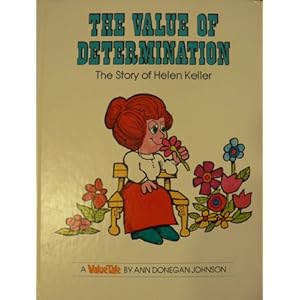
ValueTales are a set of biographies of people such as Helen Keller, Elizabeth Fry, Jackie Robinson, Louis Pasteur. Each character has an imaginary friend that helps them along as they tackle the struggles they face and achieve their dreams.
Simonetta Carr's Biographies for Young Readers. She has written books on Augustine, John Calvin and John Owen. We have read the book on John Owen. Ms. Carr does a good job explaining Puritans and that time period. This is a biography though and not a partially true story like the Value Tales
I intended on starting a timeline earlier this year, but decided to let it go at that time. I think it is the time now. We are going to make a wall timeline and I'm also going to let Autumn record people and things that she reads in a timeline book, Sonlight's Book of Time. One of the things that can be overwhelming in homeschooling is that there are so many resources--rather than too few! I can spend hours searching.
This website has a picture of a wall timeline that I liked: http://www.squidoo.com/homeschooltimelines#module4099397 It also has pictures of several other options.
I hope that this rambling post makes some sense. It may or may not--and if it doesn't, I understand! These pieces are jostling around in my head and I continue to try and find the right spots for them. I think I've put a few together. We're starting with the timeline for Autumn's reading and a wall timeline. We're going to make our way through History for Little Pilgrims and Church History ABCs this spring. Next year, we're going to read Simonetta Carr's biographies for Young Readers and add the information we learn to our timeline. My hope is that our timelines--notebook and wall-- will grow over time!
So, there have been a lot of pieces floating in my head that have started to fit together.
Here's piece number 1:
Last summer, I reviewed a book titled Church History ABCs by Stephen J. Nichols and Ned Bustard. It made me realize how little I really know about church history and how the history we are taught in schools omits the history of the church.
Piece Number 2:
A few years before I started homeschooling, my mother in law gave me a magazine from the Elijah Company that explained that there are essentially two approaches to teaching children history. The one that is used in public schools is to teach history from the inside out--via social studies. And the other approach is to teach history chronologically.
Piece Number 3:
After reading Church History ABCs, I read Pages from Church History by Stephen Nicols and really learned a lot. These two quotes from the introduction on page 13 struck me, "Hughes becomes aware of the past that has gone before, humbling and encouraging him at the same time. he is made deeper; his life is enriched because of these connections to the past. But perhaps the reverse is also true. Without meaningful connections to the past, the soul does not grow deep, but constricts, growing more and more shallow. As many have observed, our age tends to be consumed with the present, the new, and even the future."
Piece Number 4:
This article by Simonetta Carr brought together many of the conclusions I'd started to make--though she articulates them so well. It is posted on her blog here: http://simonetta-carr.blogspot.com/2010/11/church-history-for-children.html
Piece Number 5:
The book I'm finishing reading about suffering has a few observations that have really struck me. We expect life to be easy. And we idealize the past. But, really people in the past expected life to be hard and it is written in their memoirs (not in most of the fiction that is written about them today). Another essay in the book noted that our faith must be strong and not conditionally based on what we think God has or hasn't done in our lives. But, that is where the past can help both us and our children understand how real God is.
So, I've come to several conclusions, but not the full answer yet. I believe it's important to teach my children about history and include church history. But, I'm not a unit study kind of teacher. So, I have begun to search for resources and ways to help my children gain an understanding, knowledge, and appreciation of the past. I know this will be a search in progress and I'm praying and trusting that God will help me find the right resources for my children.
So far, the resources I've found this year that have been helpful and enjoyable to my children are
History for Little Pilgrims, a great primer on church history for 1st-3rd graders. The illustrations are reminiscent of the 70s and 80s
Church History ABCs, has brief biographies of people in church history. Autumn loves the humor or it and she is able to read it without too much trouble.
ValueTales are a set of biographies of people such as Helen Keller, Elizabeth Fry, Jackie Robinson, Louis Pasteur. Each character has an imaginary friend that helps them along as they tackle the struggles they face and achieve their dreams.
Simonetta Carr's Biographies for Young Readers. She has written books on Augustine, John Calvin and John Owen. We have read the book on John Owen. Ms. Carr does a good job explaining Puritans and that time period. This is a biography though and not a partially true story like the Value Tales
I intended on starting a timeline earlier this year, but decided to let it go at that time. I think it is the time now. We are going to make a wall timeline and I'm also going to let Autumn record people and things that she reads in a timeline book, Sonlight's Book of Time. One of the things that can be overwhelming in homeschooling is that there are so many resources--rather than too few! I can spend hours searching.
This website has a picture of a wall timeline that I liked: http://www.squidoo.com/homeschooltimelines#module4099397 It also has pictures of several other options.
I hope that this rambling post makes some sense. It may or may not--and if it doesn't, I understand! These pieces are jostling around in my head and I continue to try and find the right spots for them. I think I've put a few together. We're starting with the timeline for Autumn's reading and a wall timeline. We're going to make our way through History for Little Pilgrims and Church History ABCs this spring. Next year, we're going to read Simonetta Carr's biographies for Young Readers and add the information we learn to our timeline. My hope is that our timelines--notebook and wall-- will grow over time!
Comments