What did you learn about the Puritans in school growing up? What I remember learning is that the Puritans were the people who came over on the Mayflower searching for religious freedom because there was religious persecution in England. And that's about all I remember learning.
 I learned a lot more about the Puritans this week because of a children's book I read.
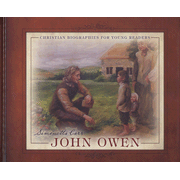
The book I read is Simonetta Carr's book on John Owen, a Puritan theologian, from her set of Christian biographies for young readers. The cover of this book is inviting and might make you think that this is a picture book about John Owen, which it is not. This book is a solid biography for young readers in grades 3-6. It is formatted wonderfully, especially for this age group. The font size and type as well as the background on each page is beautifully done. The book is very easy to read because of the formatting. The younger readers may have some difficulty reading some of the words on their own, though. My daughter struggled with the words in this book, because though her phonics are very strong, many of the words in this book need to be read aloud because they don't fit the typical rules of phonics. So, this will be a book we read together the first time or two. She loves history books, so I am sure she will then begin reading it on her own once she knows what the difficult words sound like.
The first time I read this book about John Owen, I had many thoughts that I discussed with my husband. His view of this book was very different than my initial view and that is why I clarified from the beginning that this is a biography and not a picture book. The cover made me think of this first as a story book. I expected a lot of personal information about John Owen. Instead, this is a story of his life and the things he did, which is what a biography is. Simonetta Carr did not infer things about his life. I believe she strove to stay true to what we do know about Owen, rather than embellishing his story. That is a difficult thing about figures from the past--to portray them in an unbiased way. I enjoyed Ms. Carr's blog post about just this aspect of writing biographies: http://simonetta-carr.blogspot.com/2010/11/good-bad-and-everyone-else.html
On Ms. Carr's website: http://www.simonettacarr.com/John-Owen you can see a video which shows the illustrations from the book by Matt Abraxas, which are wonderfully done. But, the book includes many pictures of real places and other historical documents and artwork as well. The explanations of difficult concepts such as what a theologian is and the book of common prayer are very good, though your children may have a few more questions about what Parliament is. It is explained at a very simple level in this book, but they may still have more questions.
A month ago, I read an article by Ms. Carr about why we teach our children church history. I loved it. It helped me articulate the thoughts that had been rattling around in my brain. Reading this book left me pondering church history. Her blog includes this article as well as other thoughts about teaching our children church history. It is interesting and easy to read. Her blog is: http://simonetta-carr.blogspot.com/
This book would be a good resource to help children understand the lives of the Puritans and that period of history. It would be a wonderful addition to a church library, to a Christian school's Church History curriculum, or to a homeschooling family's church history lessons. It is very easy to read about events in history and not see how the little pieces fit together. Reading a book like this may help your children see that the figures in church history matter as much as other key figures like the great scientists and inventors that our history books are filled with. On CBD, you can see a preview of this book which will give you a better idea of Ms. Carr's writing and the content of this book. http://www.christianbook.com/john-owen-simonetta-carr/9781601780881/pd/780881?item_code=WW&netp_id=813738&event=ESRCN&view=details#curr
Please note that I did receive a complimentary copy of this book for review from Reformation Heritage Books.
The book I read is Simonetta Carr's book on John Owen, a Puritan theologian, from her set of Christian biographies for young readers. The cover of this book is inviting and might make you think that this is a picture book about John Owen, which it is not. This book is a solid biography for young readers in grades 3-6. It is formatted wonderfully, especially for this age group. The font size and type as well as the background on each page is beautifully done. The book is very easy to read because of the formatting. The younger readers may have some difficulty reading some of the words on their own, though. My daughter struggled with the words in this book, because though her phonics are very strong, many of the words in this book need to be read aloud because they don't fit the typical rules of phonics. So, this will be a book we read together the first time or two. She loves history books, so I am sure she will then begin reading it on her own once she knows what the difficult words sound like.
The first time I read this book about John Owen, I had many thoughts that I discussed with my husband. His view of this book was very different than my initial view and that is why I clarified from the beginning that this is a biography and not a picture book. The cover made me think of this first as a story book. I expected a lot of personal information about John Owen. Instead, this is a story of his life and the things he did, which is what a biography is. Simonetta Carr did not infer things about his life. I believe she strove to stay true to what we do know about Owen, rather than embellishing his story. That is a difficult thing about figures from the past--to portray them in an unbiased way. I enjoyed Ms. Carr's blog post about just this aspect of writing biographies: http://simonetta-carr.blogspot.com/2010/11/good-bad-and-everyone-else.html
On Ms. Carr's website: http://www.simonettacarr.com/John-Owen you can see a video which shows the illustrations from the book by Matt Abraxas, which are wonderfully done. But, the book includes many pictures of real places and other historical documents and artwork as well. The explanations of difficult concepts such as what a theologian is and the book of common prayer are very good, though your children may have a few more questions about what Parliament is. It is explained at a very simple level in this book, but they may still have more questions.
A month ago, I read an article by Ms. Carr about why we teach our children church history. I loved it. It helped me articulate the thoughts that had been rattling around in my brain. Reading this book left me pondering church history. Her blog includes this article as well as other thoughts about teaching our children church history. It is interesting and easy to read. Her blog is: http://simonetta-carr.blogspot.com/
This book would be a good resource to help children understand the lives of the Puritans and that period of history. It would be a wonderful addition to a church library, to a Christian school's Church History curriculum, or to a homeschooling family's church history lessons. It is very easy to read about events in history and not see how the little pieces fit together. Reading a book like this may help your children see that the figures in church history matter as much as other key figures like the great scientists and inventors that our history books are filled with. On CBD, you can see a preview of this book which will give you a better idea of Ms. Carr's writing and the content of this book. http://www.christianbook.com/john-owen-simonetta-carr/9781601780881/pd/780881?item_code=WW&netp_id=813738&event=ESRCN&view=details#curr
Please note that I did receive a complimentary copy of this book for review from Reformation Heritage Books.
Comments