This is the next post about one of the booklets.

Today I'm going to write about the booklet I read first.
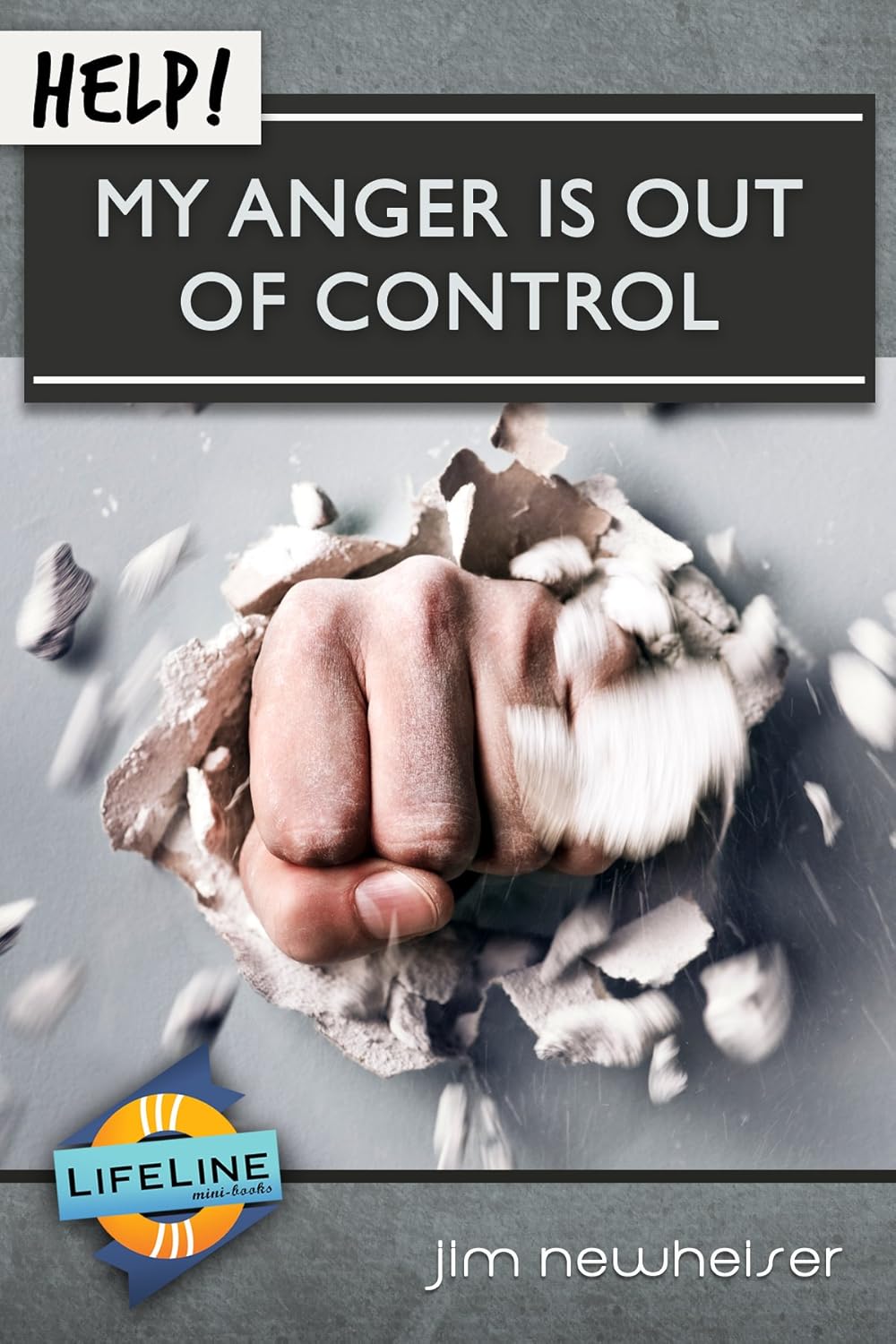
It is titled, Help! My Anger is Out of Control, by Jim Newheiser. It's interesting. I don't always know what books God is going to bring across my path and what paths He's going to take me down. I picked up this booklet this morning and I'm glad I did.
Anger is something I've had to deal with in my life--just like everyone else I know. It is an emotion that is part of being human. But, anger can be very destructive. This booklet made me stop and consider the sources of my anger and what prompts me to get anger. It also made me consider my own sin and its ramifications. I felt the author had some very valuable insights. The first thing I learned was that anger is our response to our own judgment against perceived evil against us in our lives--it comes from judgments that we make. The examples the author gave for his points were easy to understand. one very interesting point is that when people give in to anger, they are at risk of losing control (pg.13). He doesn't mention this, but I believe that Anger gives a false sense of control--it is deceptive in this way. I agree with the author that anger leads to other sins, is dangerous, and is contagious. Another very interesting point is that sinful anger focuses on our own kingdom, rights, and concerns, not on God's kingdom, rights, and concerns. Newheisers's examination of why we get angry was also very helpful to me. It also explained to me how many Christian counselors have come to the conclusion that depression, anger, and other emotional reactions do not have biological roots. And this is the first point of discussion that I want to talk about.
After I had each of my children, I went through post-partum depression. Our marriage counselor had wisely explained to my husband and I before we got married that my response to feeling hurt is anger. When I was dealing with the hormone swings that come from nursing, my depression played out in anger rather than sadness. I had not been a person prone to such anger before having children. I wish now that I had taken an anti-depressant at the time. Yes, I sinned in my depression, but my body was not cooperating with me. An anti-depressant, I believe, would have allowed me to get to the emotional place where I could make a choice to sin or not sin in my anger.
In this book, Newheiser says on page 19 that "all sin, including anger, begins in the heart." Ah. The author goes on to explain the ramifications of this. As I read this, I finally understood how some Christian counselors could see depression simply as sin, --because it must all begin in the heart.
This is the point that I adamantly disagree with and I have struggled over the years to argue against. Not because I didn't know my own argument, but because I didn't know exactly what I was arguing against--the root of the argument on the other side. I have been pondering this for several weeks now. I know people that don't advise anti-depressants and other medication because they believe that Christians who take them are simply sinning and that if they dealt with their sin, then they wouldn't need the medicine. People who have said such things to me over the years have revealed something very important to me when they say this. First, that they themselves have neither experienced it themselves nor have known a strong Christian who dealt with mental illness. I say that because people who are actively seeking God are usually trying to deal with the sin in their lives and Sunday Christians and unbelievers don't necessarily care (they may or may not). Secondly, the case may be that they have been taught that Christians don't need medicine for mental illness, including depression. I know so many Christians who will advocate the medicine sometimes (like in emergency situations), but then at others resist taking medicine at all costs because somehow it is bad. I am surprised at how often I come across Christians who are stand offish about taking medicine, for all medical situations across the board, though one can argue that doctors and medicine are a gift from the Lord.
I read a really great article here that I agree with about mental illness and biblical counseling. This article and discussion is relevant to this author's discussion of anger, because he doesn't acknowledge or agree with a biological source. I do believe that there can be a chemical imbalance that can make people--more prone to anger. I am not excusing the anger, but I want to acknowledge that the propensity to irritation and anger can be exacerbated. In Lorraine Pintus' book Jumping of the Hormone Swing, she gives a wonderful discussion of women's hormones and PMS/Menopause. She doesn't let women off the hook for sinning against others, but she does acknowledge the difficulty of managing ones' emotions when our hormones are affecting us. If you are struggling with this, I highly recommend this book! It's wonderful, biblically sound, and very helpful.
What I realized after a week of reflecting about this booklet is that it is just that--a booklet, not a book. Anger is a big subject, because it's a big emotion. This booklet will probably give you some food for thought. It's not exhaustive. It can't be in so few pages. Sometimes I read a lot into a small amount of words because I'm so analytical. I realize this.
There are a few other points about anger that I believe worthy of mentioning:
1. I think that no one is immune to getting angry. We are human. Even the person who thinks they have completely died to self and can get angry. I've seen it.
2. Anger that is not expressed outwardly is still anger if it is in your heart. The conflict that is at the source needs to be dealt with. Even if one thinks that other's won't know, what is in the heart will come out through a snippy tone of voice or facial expressions.
There was one really big question I was left with after reading this booklet: What I felt after reading this book is that anger is because of perceived evil--but what if that evil is real and not a wrong perception? What if wrong has been done? What if when you speak the truth in love--and try to let someone know that they've hurt you, they lash out at you? Are you simply supposed to take it? What if the other person really intended to hurt you--intended to sin against you? I remember my dad telling me once that if someone hurt him, he was going to hurt them back harder. I think Christians can fall into this trap by using indirect means like excluding people from family events, by speaking passive aggressively--implying comparison between people as a means to manipulate. Christians are human.
As usual, I seem to have more questions than answers, but I do trust that God will help me figure things out when He wants me to--and for that I'm very thankful.
Please note that I received a complimentary copy of this booklet for review from Shepherd Press.
Today I'm going to write about the booklet I read first.
It is titled, Help! My Anger is Out of Control, by Jim Newheiser. It's interesting. I don't always know what books God is going to bring across my path and what paths He's going to take me down. I picked up this booklet this morning and I'm glad I did.
Anger is something I've had to deal with in my life--just like everyone else I know. It is an emotion that is part of being human. But, anger can be very destructive. This booklet made me stop and consider the sources of my anger and what prompts me to get anger. It also made me consider my own sin and its ramifications. I felt the author had some very valuable insights. The first thing I learned was that anger is our response to our own judgment against perceived evil against us in our lives--it comes from judgments that we make. The examples the author gave for his points were easy to understand. one very interesting point is that when people give in to anger, they are at risk of losing control (pg.13). He doesn't mention this, but I believe that Anger gives a false sense of control--it is deceptive in this way. I agree with the author that anger leads to other sins, is dangerous, and is contagious. Another very interesting point is that sinful anger focuses on our own kingdom, rights, and concerns, not on God's kingdom, rights, and concerns. Newheisers's examination of why we get angry was also very helpful to me. It also explained to me how many Christian counselors have come to the conclusion that depression, anger, and other emotional reactions do not have biological roots. And this is the first point of discussion that I want to talk about.
After I had each of my children, I went through post-partum depression. Our marriage counselor had wisely explained to my husband and I before we got married that my response to feeling hurt is anger. When I was dealing with the hormone swings that come from nursing, my depression played out in anger rather than sadness. I had not been a person prone to such anger before having children. I wish now that I had taken an anti-depressant at the time. Yes, I sinned in my depression, but my body was not cooperating with me. An anti-depressant, I believe, would have allowed me to get to the emotional place where I could make a choice to sin or not sin in my anger.
In this book, Newheiser says on page 19 that "all sin, including anger, begins in the heart." Ah. The author goes on to explain the ramifications of this. As I read this, I finally understood how some Christian counselors could see depression simply as sin, --because it must all begin in the heart.
This is the point that I adamantly disagree with and I have struggled over the years to argue against. Not because I didn't know my own argument, but because I didn't know exactly what I was arguing against--the root of the argument on the other side. I have been pondering this for several weeks now. I know people that don't advise anti-depressants and other medication because they believe that Christians who take them are simply sinning and that if they dealt with their sin, then they wouldn't need the medicine. People who have said such things to me over the years have revealed something very important to me when they say this. First, that they themselves have neither experienced it themselves nor have known a strong Christian who dealt with mental illness. I say that because people who are actively seeking God are usually trying to deal with the sin in their lives and Sunday Christians and unbelievers don't necessarily care (they may or may not). Secondly, the case may be that they have been taught that Christians don't need medicine for mental illness, including depression. I know so many Christians who will advocate the medicine sometimes (like in emergency situations), but then at others resist taking medicine at all costs because somehow it is bad. I am surprised at how often I come across Christians who are stand offish about taking medicine, for all medical situations across the board, though one can argue that doctors and medicine are a gift from the Lord.
I read a really great article here that I agree with about mental illness and biblical counseling. This article and discussion is relevant to this author's discussion of anger, because he doesn't acknowledge or agree with a biological source. I do believe that there can be a chemical imbalance that can make people--more prone to anger. I am not excusing the anger, but I want to acknowledge that the propensity to irritation and anger can be exacerbated. In Lorraine Pintus' book Jumping of the Hormone Swing, she gives a wonderful discussion of women's hormones and PMS/Menopause. She doesn't let women off the hook for sinning against others, but she does acknowledge the difficulty of managing ones' emotions when our hormones are affecting us. If you are struggling with this, I highly recommend this book! It's wonderful, biblically sound, and very helpful.
What I realized after a week of reflecting about this booklet is that it is just that--a booklet, not a book. Anger is a big subject, because it's a big emotion. This booklet will probably give you some food for thought. It's not exhaustive. It can't be in so few pages. Sometimes I read a lot into a small amount of words because I'm so analytical. I realize this.
There are a few other points about anger that I believe worthy of mentioning:
1. I think that no one is immune to getting angry. We are human. Even the person who thinks they have completely died to self and can get angry. I've seen it.
2. Anger that is not expressed outwardly is still anger if it is in your heart. The conflict that is at the source needs to be dealt with. Even if one thinks that other's won't know, what is in the heart will come out through a snippy tone of voice or facial expressions.
There was one really big question I was left with after reading this booklet: What I felt after reading this book is that anger is because of perceived evil--but what if that evil is real and not a wrong perception? What if wrong has been done? What if when you speak the truth in love--and try to let someone know that they've hurt you, they lash out at you? Are you simply supposed to take it? What if the other person really intended to hurt you--intended to sin against you? I remember my dad telling me once that if someone hurt him, he was going to hurt them back harder. I think Christians can fall into this trap by using indirect means like excluding people from family events, by speaking passive aggressively--implying comparison between people as a means to manipulate. Christians are human.
As usual, I seem to have more questions than answers, but I do trust that God will help me figure things out when He wants me to--and for that I'm very thankful.
Please note that I received a complimentary copy of this booklet for review from Shepherd Press.
Comments