When I was student teaching in first grade over fifteen years ago, I remember being in awe of how a child learns to read. I felt this enormous amazement at how a child's brain connects symbols to sounds, sounds together to make words, and then words together to make sentences and to make meaning! In the school where I student taught, there was no set curriculum. Teachers always wrote their own. Fast forward to when my oldest daughter was 4. It was time to start teaching the letters! And then we'd be on to reading.
I wasn't sure how to teach the letters and their sounds. I couldn't find a curriculum with my oldest daughter that would teach me how. So, my oldest daughter, at age 4, and my middle daughter, at age 2, learned their letters and sounds by watching Leapfrog's Letter Factory DVD. Then, they both went through the Explode the Code books A, B, and C. These books are wonderful! They focus on developing a child's visual discrimination (essential building block for good reading), ability to follow directions (on the clues page), beginning phonics skills, and fine motor skills. It is very important to get the teacher's guide to go with these books because otherwise a child can't complete the clue pages in the books.
By the time my son was ready for his alphabet, I finally found a curriculum that would teach me "how" to teach the alphabet. It was Hooked on Phonics, Pre-K. I love the video that comes with the series. For each letter, there are several kinesthetic activities to do for each letter. Part 1 focuses on the capital letters and Part 2 on the lowercase letters. I also used The Letter of the Week, Book 1 by the Mailbox Books Staff. This was great letter reinforcement and cut and paste practice, which my left-handed child needed.
Once my children learned their letters, it was time to start learning to read. Initially, I started out with the Ordinary Parent's Guide to Teaching Reading by Jessie Wise. This book does give instructions on how to teach the alphabet, but since my oldest daughter already knew that, I started with the reading lessons. I had chosen this book because Jessie Wise talks so persuasively in her book The Well-Trained Mind. After reading WTM, it felt as if the OPGTR must be right! I am not exactly sure what it is about Ms. Wise's writing, but she writes in such a way that makes the reader feel that if you follow the model she sets forth, then you will be guaranteed to have a very well-educated and academically successfuly child. What I learned as I started using the Ordinary Parent's Guide is that the reason there are so many different curriculum is that there are so many different children--there is no one program that will work for all children.
Autumn and I spent three weeks on the first lesson of OPGR and it wasn't clicking for her. I had looked at How to Teach your Child to Read in 100 Easy Lessons, but had been so puzzled by the strange markings that I had put it back on my shelf. After 3 weeks, though, I gave up and went back to the drawing board. I was putting a lot of pressure on myself and my daughter. No one my husband works with homeschools and I felt that I had to keep up with the Jones' and prove to the world that this homeschooling thing would be the right thing for my family--I needed to prove to myself and others that my daughter would and could learn better at home than in a school setting.
At this point, I pulled 100 Easy Lessons off the shelf and started working with it. This is when it clicked and I figured out how to use this book. Whenever I talk to parents about this book, I encourage parents not to go straight through this book, one lesson per day, from one to 100. Here's why:
1. We want our children to love reading and learning. Forcing reading down their throats will only push them away.
2. There are several big clicks that need to happen in the book (1 is somewhere around lessons 30-40, and a second is around lesson 60, and a third around 70-80). These clicks are different for every child, but I did see all three of my children have big clicks. If a child pushes ahead without those clicks, they won't become fluent readers. It will take them longer to learn to read.
3. You don't want your child to learn to read from simply rote memory, but rather to develop phonics skills in the process. So, I did 5 lessons, then backed up, repeated and went forward 10 lessons, went back 5 lessons, repeated and went forward 5 or 10 lessons. If my child stumbled at all, I'd back up 5 and repeat.
4. I started using this book with my kids in PK4. But, in that first year, I did 1/2 a lesson each time I worked with my kids. By the end of PK4, one of my kids was at lesson 20, one at lesson 30, and one at lesson 15. But, by the end of grade 2, they were all done. It is 100 easy lessons, but my kids all finished at different points--1 was done by the end of kindergarten, 1 in the middle of 1st and 1 at the end of 1st. When a child is done with 100 Easy lessons, they will have a 2nd grade reading level.
5. After 100 easy lessons, I continue with Phonics Pathways, reading 1-2 pages per day (repeating when they don't get them to practice). 100 Easy Lessons doesn't do a lot of work with compound and multisyllabic words, which kids need and Phonics Pathways covers.
6. I don't do the writing portion at the end of the lessons. My kids fine motor skills developed later and I didn't want that part of the lessons to frustrate my kids.
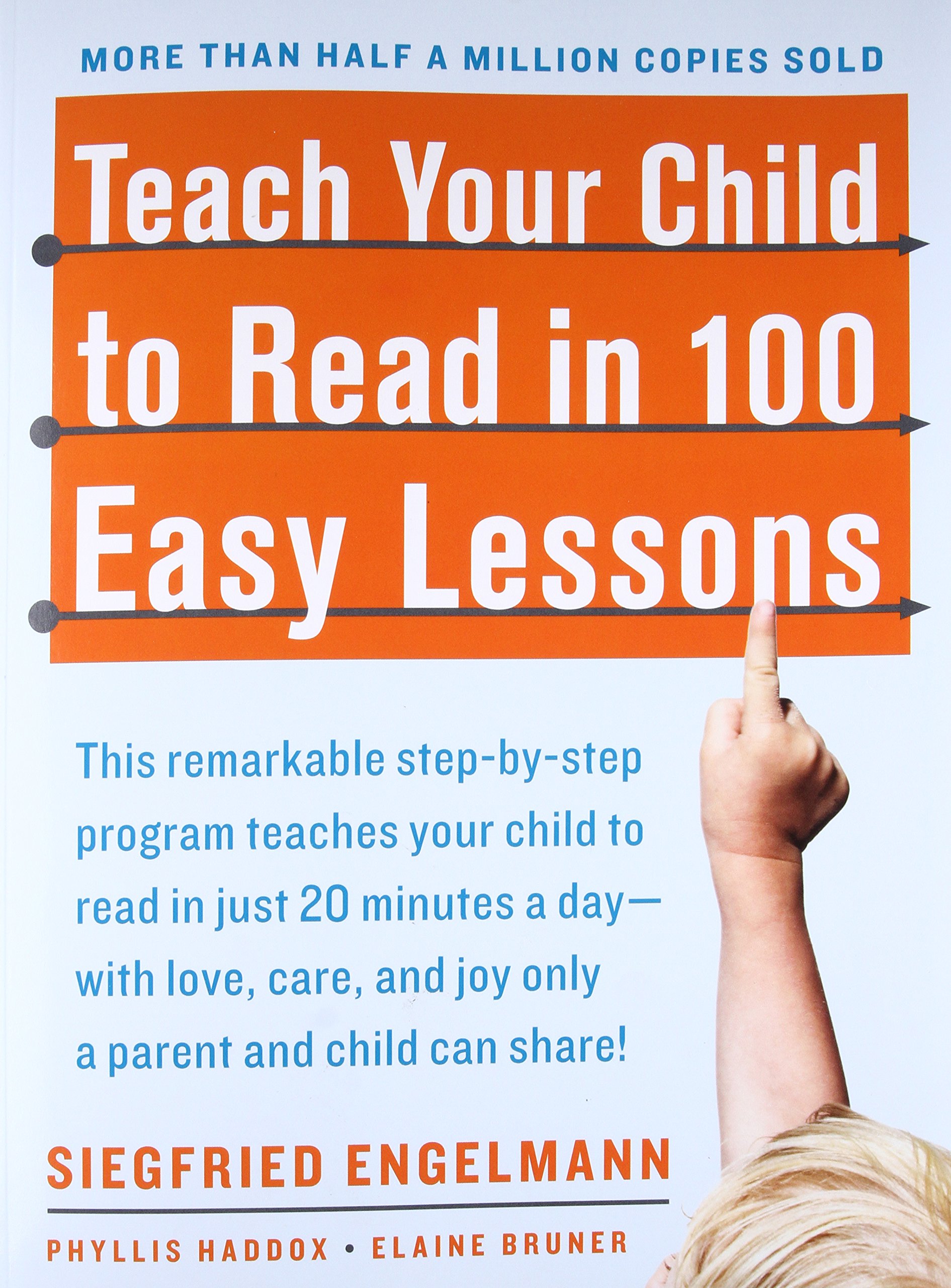 7. 100 Easy Lessons is one of the few reading programs that is not based on rhyme and that is why it works for many kids when other programs don't. But, it also teaches rhyme! And it is one of the few programs that teaches rhyme. My oldest daughter is an excellent reader (always several grades above her reading level) but she didn't get rhyme until she was in 2nd grade. Ironically, she wrote poetry as naturally as most people breathe air in 2nd grade, so not rhyming early did not impede her reading or writing development.
8. I use Explode the Code alongside 100 Easy Lessons. If a child reads easily, 100 Easy Lessons and Explode the Code whole and half number books are enough phonics. But, if a child struggles, I would add in the phonics lessons from the Explode the Code teachers guides. Using these books together would provide an inexpensive and strong phonics program.
As for where to buy these books... CBD is the best place to get the Explode the Code books and
Teacher's books inexpensively. Each Explode the Code book is about $7 and the teacher's guides cost about the same, but 1 teacher's guides covers 2 whole number books and 2 half number books. As for 100 Easy Lessons, it hasn't been updated in years so a new or used copy can be purchased on Amazon. When I checked, a used copy could be purchased for $10.50 and a new one for $18. If you're going to use it with several children, a new copy is worth it. As for Phonics Pathways, don't buy anything older than the 9th edition. It has some great eye tracking exercises in the back that may come in handy! Dolores Hiskes also wrote Reading Pathways (older editions are titled Pyramid) and this can be a helpful book if kids are skipping words and need more practice tracking.
It's been several years since my kids finished their phonics lessons. My youngest has just started book 8 of Explode the Code because I use it in place of spelling through 3rd/4th grade. Explode the Code really is an amazing series because it works on visual discrimination, reading comprehension, blends, spelling, writing, and pulling words apart and putting them together (a modified Orton Gillingham type approach). I am so glad I found these books to use. They gave all of my children a solid base in reading. So solid that all of my kids have always read well above grade level--
I hope that I've remembered everything in this post. Please comment if you have any thoughts or questions!
I wasn't sure how to teach the letters and their sounds. I couldn't find a curriculum with my oldest daughter that would teach me how. So, my oldest daughter, at age 4, and my middle daughter, at age 2, learned their letters and sounds by watching Leapfrog's Letter Factory DVD. Then, they both went through the Explode the Code books A, B, and C. These books are wonderful! They focus on developing a child's visual discrimination (essential building block for good reading), ability to follow directions (on the clues page), beginning phonics skills, and fine motor skills. It is very important to get the teacher's guide to go with these books because otherwise a child can't complete the clue pages in the books.
By the time my son was ready for his alphabet, I finally found a curriculum that would teach me "how" to teach the alphabet. It was Hooked on Phonics, Pre-K. I love the video that comes with the series. For each letter, there are several kinesthetic activities to do for each letter. Part 1 focuses on the capital letters and Part 2 on the lowercase letters. I also used The Letter of the Week, Book 1 by the Mailbox Books Staff. This was great letter reinforcement and cut and paste practice, which my left-handed child needed.
Once my children learned their letters, it was time to start learning to read. Initially, I started out with the Ordinary Parent's Guide to Teaching Reading by Jessie Wise. This book does give instructions on how to teach the alphabet, but since my oldest daughter already knew that, I started with the reading lessons. I had chosen this book because Jessie Wise talks so persuasively in her book The Well-Trained Mind. After reading WTM, it felt as if the OPGTR must be right! I am not exactly sure what it is about Ms. Wise's writing, but she writes in such a way that makes the reader feel that if you follow the model she sets forth, then you will be guaranteed to have a very well-educated and academically successfuly child. What I learned as I started using the Ordinary Parent's Guide is that the reason there are so many different curriculum is that there are so many different children--there is no one program that will work for all children.
Autumn and I spent three weeks on the first lesson of OPGR and it wasn't clicking for her. I had looked at How to Teach your Child to Read in 100 Easy Lessons, but had been so puzzled by the strange markings that I had put it back on my shelf. After 3 weeks, though, I gave up and went back to the drawing board. I was putting a lot of pressure on myself and my daughter. No one my husband works with homeschools and I felt that I had to keep up with the Jones' and prove to the world that this homeschooling thing would be the right thing for my family--I needed to prove to myself and others that my daughter would and could learn better at home than in a school setting.
At this point, I pulled 100 Easy Lessons off the shelf and started working with it. This is when it clicked and I figured out how to use this book. Whenever I talk to parents about this book, I encourage parents not to go straight through this book, one lesson per day, from one to 100. Here's why:
1. We want our children to love reading and learning. Forcing reading down their throats will only push them away.
2. There are several big clicks that need to happen in the book (1 is somewhere around lessons 30-40, and a second is around lesson 60, and a third around 70-80). These clicks are different for every child, but I did see all three of my children have big clicks. If a child pushes ahead without those clicks, they won't become fluent readers. It will take them longer to learn to read.
3. You don't want your child to learn to read from simply rote memory, but rather to develop phonics skills in the process. So, I did 5 lessons, then backed up, repeated and went forward 10 lessons, went back 5 lessons, repeated and went forward 5 or 10 lessons. If my child stumbled at all, I'd back up 5 and repeat.
4. I started using this book with my kids in PK4. But, in that first year, I did 1/2 a lesson each time I worked with my kids. By the end of PK4, one of my kids was at lesson 20, one at lesson 30, and one at lesson 15. But, by the end of grade 2, they were all done. It is 100 easy lessons, but my kids all finished at different points--1 was done by the end of kindergarten, 1 in the middle of 1st and 1 at the end of 1st. When a child is done with 100 Easy lessons, they will have a 2nd grade reading level.
5. After 100 easy lessons, I continue with Phonics Pathways, reading 1-2 pages per day (repeating when they don't get them to practice). 100 Easy Lessons doesn't do a lot of work with compound and multisyllabic words, which kids need and Phonics Pathways covers.
6. I don't do the writing portion at the end of the lessons. My kids fine motor skills developed later and I didn't want that part of the lessons to frustrate my kids.
7. 100 Easy Lessons is one of the few reading programs that is not based on rhyme and that is why it works for many kids when other programs don't. But, it also teaches rhyme! And it is one of the few programs that teaches rhyme. My oldest daughter is an excellent reader (always several grades above her reading level) but she didn't get rhyme until she was in 2nd grade. Ironically, she wrote poetry as naturally as most people breathe air in 2nd grade, so not rhyming early did not impede her reading or writing development. 8. I use Explode the Code alongside 100 Easy Lessons. If a child reads easily, 100 Easy Lessons and Explode the Code whole and half number books are enough phonics. But, if a child struggles, I would add in the phonics lessons from the Explode the Code teachers guides. Using these books together would provide an inexpensive and strong phonics program.
As for where to buy these books... CBD is the best place to get the Explode the Code books and
Teacher's books inexpensively. Each Explode the Code book is about $7 and the teacher's guides cost about the same, but 1 teacher's guides covers 2 whole number books and 2 half number books. As for 100 Easy Lessons, it hasn't been updated in years so a new or used copy can be purchased on Amazon. When I checked, a used copy could be purchased for $10.50 and a new one for $18. If you're going to use it with several children, a new copy is worth it. As for Phonics Pathways, don't buy anything older than the 9th edition. It has some great eye tracking exercises in the back that may come in handy! Dolores Hiskes also wrote Reading Pathways (older editions are titled Pyramid) and this can be a helpful book if kids are skipping words and need more practice tracking.
It's been several years since my kids finished their phonics lessons. My youngest has just started book 8 of Explode the Code because I use it in place of spelling through 3rd/4th grade. Explode the Code really is an amazing series because it works on visual discrimination, reading comprehension, blends, spelling, writing, and pulling words apart and putting them together (a modified Orton Gillingham type approach). I am so glad I found these books to use. They gave all of my children a solid base in reading. So solid that all of my kids have always read well above grade level--
I hope that I've remembered everything in this post. Please comment if you have any thoughts or questions!
Comments