At lunch one day this week, Autumn brought a book with her to the table. She actually wanted to read it instead of eating her lunch. So, what was this book? It happened to be a new book that's coming out on Athanasius. Yes, Athanasius. This book is newest release in a series written by Simonetta Carr on figures from church history.


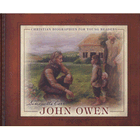
Earlier this year, I reviewed one of the other books from the series on John Owen. Reviewing that book challenged me to think critically about biographies and what we, and our children, learn from reading them.
There is a saying that if we do not learn from history then we are doomed to repeat it. There are also other sayings about history and why we study it. I always told my middle school students that we studied history so that we could learn from the past and not have to reinvent the wheel over and over. Both of these sayings apply to this series of Christian biographies for children.
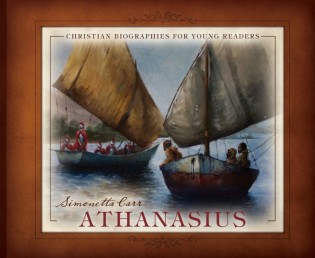
I asked Simonetta what she wants children to learn from this book on Athanasius. She said, "Most of all, that Jesus is fully God. Hopefully, they will also realize that we don't always understand some biblical doctrines, and it's OK. They will see the importance of Christian councils and creeds, and hopefully be better prepared to face future Dan Browns (they pop up every few years)."
This was exactly what my daughter took from this book when she read it. I listened as she gave a summary of the book to my younger daughter. She saw that it was important for Athanasius to stand firm in his belief that Jesus was fully God and fully man (she actually said that).
Her reading of the book opened the door to a really important discussion about salvation and the trinity. Sometimes it's hard to know how to help children understand why theology matters. But, it does. It matters quite a lot. This biography recounts a time in history when Jesus' deity was questioned. It was challenged. People chose to believe Arius' teaching because it seemed more logical and easier to believe and follow. But, what is easier to believe is often not right. As parents, this is a lesson we have to teach our children.
Today there is a great deal of controversy about hell and whether it is really real. Is this controversy any different than what Athanasius faced? Perhaps not. It comes down to questioning the Word of God and choosing to believe what the Bible says or what is easier to believe.
Ms. Carr's hope is that understanding the past will help our children understand their faith, theology, and the Word of God better. This equipping can help our children discern what is the Truth and what is not. I have been watching my oldest daughter do this more and more. I pray that she will continue to do so throughout her life.
This review is a bit unorthodox and meandering. I realize this. So, let me tell you in a quick tidbit about this book. It is a biography for children grades 3-7. I would recommend it for 8-12 year olds rather than 7 year olds as the back cover states. The illustrations are a mixture of paintings by Matt Abraxas (which are wonderful) and authentic photographs and artifacts from the past. Ms. Carr tells the story of Athanasius' life and acknowledges clearly what is known and what is unknown about his life. In contrast to many novel biographies written today, Ms. Carr has stuck to what is known and not filled in the gaps with conjectures. This book tells the story of an interesting time in church history.
This youtube video briefly summarizes the book:
Do I think well of this book? Is it worthy of reading and discussion? My daughter is in agreement with me--quite definitely. She told me with certainty today, "I love history, Mommy, and I love this book!"
Please note that I received a complimentary copy of this book for review from Reformation Heritage Books.
Comments